
ROYAL FAMILY
The Final Eviction Card: How Andrew’s Court Summons Hands King Charles Total Leverage Over Royal Lodge

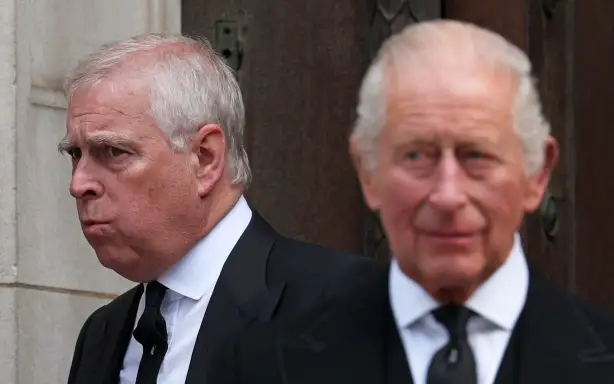
The Final Eviction Card: How Andrew’s Court Summons Hands King Charles Total Leverage Over Royal Lodge
For years, the battle of Royal Lodge has stood as the most stubborn, passive-aggressive civil war inside the British royal family.
Despite being stripped of his patronages, honorary military affiliations, and taxpayer-funded armed protection, Andrew Mountbatten-Windsor held on to one unyielding institutional shield: a binding 75-year Crown Estate lease on the 30-room Windsor Great Park mansion signed back in 2003.
King Charles has made no secret of his desire to see his younger brother vacate the estate, proposing a smaller, highly secure footprint at Frogmore Cottage. Andrew repeatedly rebuffed every palace appeal, leveraging his ironclad legal tenancy to stand his ground.
Now, London’s High Court has abruptly tilted the board. By formally issuing a witness summons compelling Andrew to testify under oath in a £40 million fraud trial, the judiciary has delivered King Charles the exact institutional and financial leverage courtiers have sought for years.
The Financial Vice Tightens
The fundamental flaw in Andrew’s defense has always been liquidity. Under the covenants of his Crown Estate contract, maintaining the sprawling, Grade II-listed mansion requires millions in structural upkeep, specialized masonry repair, and continuous security overhead.
King Charles previously dismantled Andrew’s personal security stipend and cut his private Privy Purse allowance. Andrew managed to stall eviction by cobbling together private funds to underwrite maintenance claims, but the High Court summons dismantles whatever fragile financial scaffolding remained.
Between spiraling private security costs, high-powered commercial defense fees, and the exposure of his offshore banking ties under cross-examination, Andrew’s personal coffers are running dry. The National Audit Office and Crown Estate monitors have intensified scrutiny on whether his financial reserves can legitimately fulfill long-term maintenance covenants. A default on repair clauses provides the Crown Estate statutory grounds to forfeit the lease—legally forcing him out without requiring an act of Parliament.
Institutional Humiliation as a Bargaining Chip
Beyond balance sheets, the leverage is reputational.
Buckingham Palace courtiers are desperate to draw a firm line under Andrew’s legal entanglements before the trial’s public proceedings dominate headlines. If Andrew is forced to explain multi-hundred-thousand-pound payments from controversial associates under oath, his continued occupancy of one of the Crown’s crown-jewel residences becomes a glaring symbol of unchecked aristocratic indulgence.
Palace insiders indicate that the King’s representatives are preparing to present Andrew with a definitive ultimatum:
1. Surrender the Royal Lodge lease voluntarily, allowing the Crown Estate to reallocate or commercialize the property.
2. Accept a fully subsidized private relocation with closed-circuit security at a discreet alternative residence.
3. Face complete institutional abandonment, where the palace offers zero legal, reputational, or financial buffer as the High Court proceeds and lease forfeiture actions begin.
What once looked like an unbreakable standoff has shifted into a game of attrition. With the judicial system closing in and the palace holding the purse strings, the fortress doors of Royal Lodge are finally swinging open.

The Private Flight Logs: Fresh Police Inquiries Reopen Epstein’s Stays on Royal Estates

NOON ROYAL SHOCK! After 19 months of silence, Harry returned and fell to his knees before King Charles. No reporters, no cameras — only Harry’s broken sobs as he clung to his father’s feet. Charles, with boundless mercy, raised him gently. The royal family wept as Princess Anne gasped: ‘My God… Harry has… (For Full Information, Check Link In Comment👇🏻👇🏻)

🚨 Kendall Jenner, 31, spotted getting cozy with 66-year-old Flavio Briatore after her alleged breakup with Jacob Elordi! 😳❤️

🚨 Brad Pitt was reportedly spotted with girlfriend Ines de Ramon, looking extremely malnourished amid rumours that she had been mistreating him behind closed doors.

10 MINUTES AGO: The Palace confirmed the sad news that one of the most important members of the Royal Family has just passed away. Kate broke down next to William, saying, “It is with our deepest sorrow that we announce

jennifer lopez, 57, is still looking stunning as she was recently spotted enjoying some quality time with a mysterious man

Just 11 minutes ago: King Charles III has declared a divorce from Queen Camilla after a shocking betrayal

Vinícius Jr.’s ex-girlfriend Virginia Fonseca is reportedly getting engaged to her ex-husband, with wedding bells possibly ringing soon! ❤️💍

30 MINUTES AGO! Prince William delivered IMPORTANT NEWS to the entire nation. With tear-filled eyes and trembling lips, he forced the words out: ‘I regret to say… she has…’” (For Full Information, Check Link In Comment👇🏻👇🏻

The Final Eviction Card: How Andrew’s Court Summons Hands King Charles Total Leverage Over Royal Lodge

Under Oath: Disgraced Andrew Ordered to Give Evidence in Bombshell High Court Fraud Trial
