
CELEBRITY
Epstein Files Fallout: Pam Bondi Under Fire After Shocking ‘Collapse the System’ What Is She Hiding? 👉 Read the full story

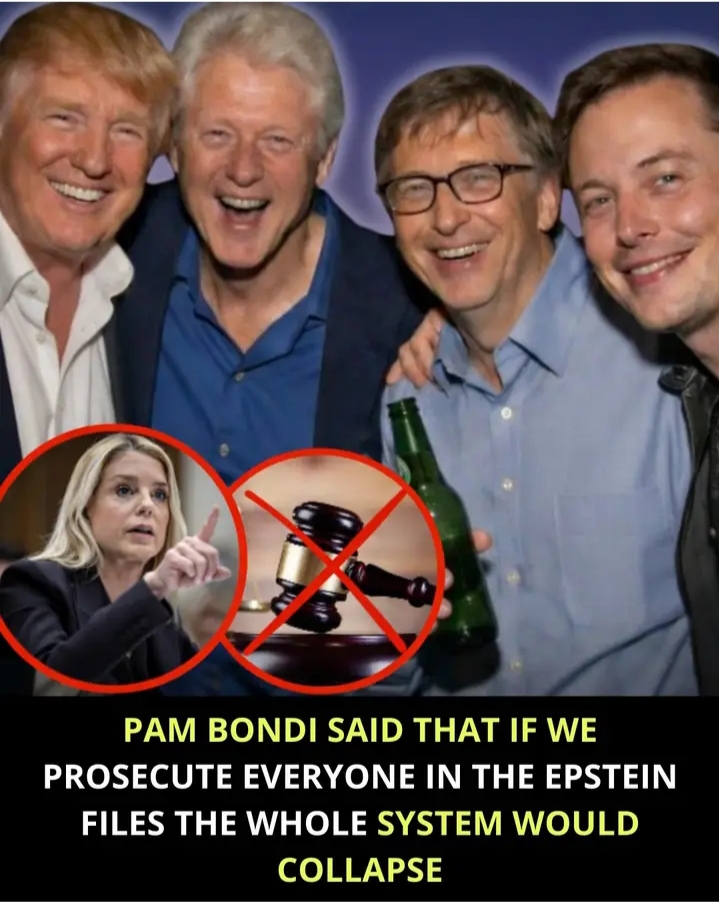
Pam Bondi’s Reported Epstein Comment Sparks Political Firestorm
U.S. Attorney General Pam Bondi is facing intense backlash after reportedly saying that prosecuting every individual named in the Jeffrey Epstein files would “collapse the whole system.”
The remark, allegedly made during a closed-door Justice Department meeting and later leaked, quickly ignited debate across social media and cable news. Critics have framed the comment as evidence of a potential cover-up, while supporters argue it reflects the practical realities of large-scale federal investigations.
Legal analysts stress a key distinction: appearing in the Epstein files does not equate to criminal guilt. The documents released so far—including court records, flight logs, address books, emails, and witness statements—contain thousands of names. In many cases, individuals were referenced as social acquaintances, business contacts, or passengers on flights years before Epstein’s crimes became widely known. Inclusion in investigative material is not proof of wrongdoing. Criminal prosecution requires specific, corroborated evidence and must meet the high burden of proof in court.
The Epstein case has drawn sustained public attention because of the number of high-profile figures mentioned in the records. However, prosecutors are bound by evidentiary standards, statutes of limitations, jurisdictional constraints, and due process requirements. In several instances, investigations concluded that available evidence was insufficient to support charges.
Bondi’s reported comment has been interpreted in sharply different ways. Some view it as a candid acknowledgment of logistical and legal limits—the sheer volume of names, aging evidence, and the risks of pursuing weak cases that could fail in court. Others see it as a troubling signal that institutional stability may be taking precedence over aggressive accountability.
Since Epstein’s 2019 death, public skepticism has remained high, with many Americans convinced that powerful individuals have avoided scrutiny. The ongoing release of documents under federal transparency measures has been gradual and often heavily redacted, adding to frustration.
Whether Bondi’s statement was hyperbole, caution, or political messaging, it has intensified debate over how far investigations should go—and what accountability realistically looks like within the constraints of the legal system.
For now, the controversy underscores the tension between public demands for sweeping prosecutions and the justice system’s requirement for concrete, admissible evidence.

JUST IN….The political world is in a complete state of shock after a nationally televised forum ended in a way no one could have predicted! It started when 19-year-old Barron Trump tried to land a sharp insult on a veteran senator to impress his father. But he wasn’t prepared for Barack Obama to step in. In just 8 seconds, Obama didn’t just defend the senator—he flipped the script and dropped a bombshell…..FULL STORY 👇 👇 👇
BREAKING….Trump Just revealed a disastrous error he made – and revealed just how unstable he is….FULL STORY ⬇️ ⬇️
JUST IN …..Donald Trump’s ‘worrying’ speech sparks concern as viewers all say same thing because…FULL STORY 👇 👇
JUST IN….The Pentagon’s press crackdown under Trump has just been struck down — but what really went on behind the scenes might shock you. Now, secrets had surface, and the public is left wondering: how close did democracy come to being silenced — and who really pulled the strings?…. FULL STORY 👇 👇

JUST IN….The 36 most stupid things Donald Trump has ever said….SEE MORE 👇 👇
BREAKING …What Was Really on Epstein’s Tapes? The HOME VIDEOS That Powerful Men Desperately Hoped Would Never See the Light of Day Shocking new footage from Jeffrey Epstein’s private archives has emerged, revealing deeply unsettling clips from his most controversial homes. These disturbing videos expose the dark realities behind Epstein’s lavish lifestyle,… MORE DETAILS BELOW 👇 👇 👇
GREENLAND “CLOSED” TO THE U.S.? CANADA–DENMARK SIGN HISTORIC ARCTIC PACT, TRUMP RESPONDS FURIOUSLY ⬇️ A new Arctic agreement is stirring intense debate across global political circles a bigger question is now emerging: Could this deal be reshaping the balance of power in the Arctic? ⬇️The full story and the deeper strategy behind this agreement are in the link 👇 🖇️ 👇 .
THE HAMMER DROPS: Gavin Newsom Reveals the “Bondi File” — The Room Falls Silent for 42 Seconds! The hearing was routine until Gavin Newsom stepped to the mic. No teleprompter. Just one unmarked folder that hadn’t been seen by a single staffer. He didn’t speak for nine full seconds. The silence was deafening. Then, his voice cut through like a razor: The room exploded. T.r.u.m.p’s expression turned grim. B0ndi’s face went ash-white. C-SPAN hit record viewership as the “Red Folder” became federal evidence. Game over. 👉FULL STORY 👇 👇 👇

JUST IN….Melania ŤRUMP ordered to testify under oath. A major legal shift has just occurred as judges rule that spousal privilege will not apply in several key cases. From the Mar-a-Lago documents to the newly unsealed Epstein files, the testimony everyone has been waiting for is finally happening. This isn’t just a court appearance—it’s a high-stakes moment that could change the direction of multiple investigations. ⬇️ READ THE FULL TRANSCRIPT & THE LIST OF COURT ORDERS BELOW 👇 👇 👇
BREAKING NEWS….The walls of corruption are crumbling! Senator Ron Wyden has just dropped a MASSIVE BOMBSHELL on Deputy Attorney General Todd Blanche—and the details are absolutely sickening. Why is Trump’s former personal lawyer blocking a “mysterious” 69-page Epstein report?…FULL STORY ⬇️⬇️

JUST IN….Maria Farmer called the Federal Bureau of Investigation, she claimed Jeffrey Epstein had photos of her underage sisters and described what she witnessed inside his mansion. She says the call was ignored. No case. No follow-up. No trace. For decades, no one could find proof she ever made that call… until 2025, when a hidden document finally surfaced — confirming a complaint filed on September 3, 1996. Nine years later, investigators would uncover dozens of victims. But by then… how much had already been allowed to happen? Now, 12 women are suing the FBI for $100 million, claiming those early warnings were ignored — and that failure changed everything. The file existed the whole time. So the question is no longer if it was real… 👉 It’s who chose to bury it — and why. 👇 Full timeline, missing file details, and what investigators are uncovering now….FULL STORY 👇 👇 👇
