
CELEBRITY
BILL CLINTON FLIPS THE SCRIPT on TRUMP — 3 A.M. MOVE GOES MEGAVIRAL ⚡ This feels like a direct challenge to Trump’s favorite weapon: intimidation. Instead of retreating, Clinton steps forward, signaling he’s ready to testify and put everything on the table.

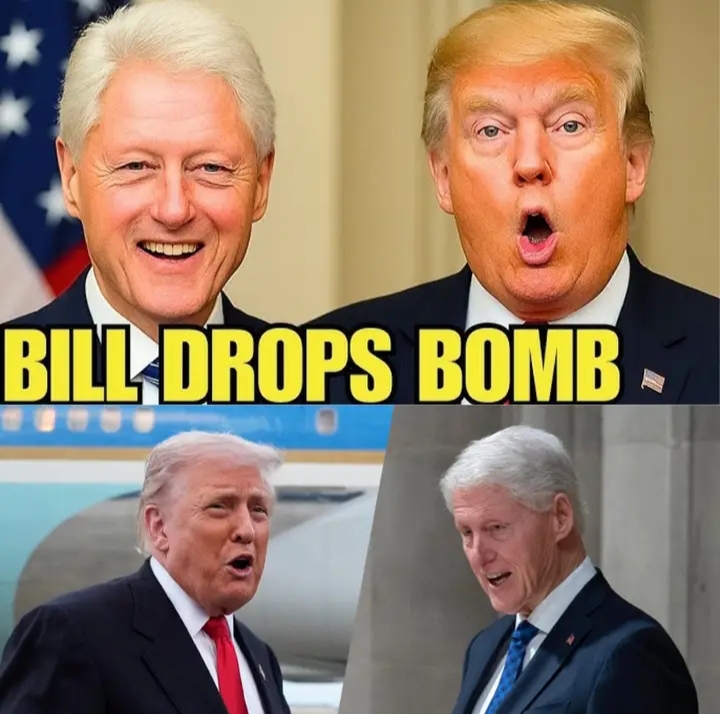
🚨 BILL CLINTON FLIPS THE SCRIPT on TRUMP — 3 A.M. MOVE GOES MEGAVIRAL ⚡
This feels like a direct challenge to Trump’s favorite weapon: intimidation. Instead of retreating, Clinton steps forward, signaling he’s ready to testify and put everything on the table.
Allies say the message is simple — if names are going to be dragged into the spotlight, then everyone walks into it together. That move alone has Washington buzzing about who’s actually being protected behind the scenes.
Here’s the pressure point: accountability cuts both ways. If Clinton did something criminal, consequences should follow — no exceptions. But if his conduct was immoral yet legal, testimony could expose others whose actions were far worse. This isn’t loyalty. It’s leverage — and truth may be the most dangerous card in play.
Clinton’s Midnight Signal Raises the Stakes
In a move that set political circles buzzing overnight, former President Bill Clinton appeared to flip the script on Donald Trump’s long-used tactic of intimidation. Rather than staying silent or retreating from renewed scrutiny, Clinton signaled—through allies and public messaging—that he would be willing to testify and place his record fully on the table. The timing alone, reportedly landing in the early morning hours, gave the moment a dramatic edge and sent it racing across social media.
Those close to Clinton say the message is deliberate and calculated: if powerful figures are going to have their names dragged into public view, then no one gets special protection. That stance has fueled speculation in Washington about who benefits most from silence and whose interests are being shielded behind closed doors. The willingness to testify reframes the narrative from defense to offense, suggesting confidence that exposure may hurt others more than it hurts him.
At the heart of the moment is a blunt pressure point—accountability cuts both ways. If any criminal behavior occurred, consequences should follow, regardless of status or party. But if conduct was immoral yet legal, sworn testimony could still illuminate a broader web of behavior that has remained hidden. In that sense, this isn’t about loyalty or personal vindication; it’s about leverage. And in a political climate built on fear and deflection, truth itself may be the most destabilizing weapon in play.

JUST IN….The political world is in a complete state of shock after a nationally televised forum ended in a way no one could have predicted! It started when 19-year-old Barron Trump tried to land a sharp insult on a veteran senator to impress his father. But he wasn’t prepared for Barack Obama to step in. In just 8 seconds, Obama didn’t just defend the senator—he flipped the script and dropped a bombshell…..FULL STORY 👇 👇 👇
BREAKING….Trump Just revealed a disastrous error he made – and revealed just how unstable he is….FULL STORY ⬇️ ⬇️
JUST IN …..Donald Trump’s ‘worrying’ speech sparks concern as viewers all say same thing because…FULL STORY 👇 👇
JUST IN….The Pentagon’s press crackdown under Trump has just been struck down — but what really went on behind the scenes might shock you. Now, secrets had surface, and the public is left wondering: how close did democracy come to being silenced — and who really pulled the strings?…. FULL STORY 👇 👇

JUST IN….The 36 most stupid things Donald Trump has ever said….SEE MORE 👇 👇
BREAKING …What Was Really on Epstein’s Tapes? The HOME VIDEOS That Powerful Men Desperately Hoped Would Never See the Light of Day Shocking new footage from Jeffrey Epstein’s private archives has emerged, revealing deeply unsettling clips from his most controversial homes. These disturbing videos expose the dark realities behind Epstein’s lavish lifestyle,… MORE DETAILS BELOW 👇 👇 👇
GREENLAND “CLOSED” TO THE U.S.? CANADA–DENMARK SIGN HISTORIC ARCTIC PACT, TRUMP RESPONDS FURIOUSLY ⬇️ A new Arctic agreement is stirring intense debate across global political circles a bigger question is now emerging: Could this deal be reshaping the balance of power in the Arctic? ⬇️The full story and the deeper strategy behind this agreement are in the link 👇 🖇️ 👇 .
THE HAMMER DROPS: Gavin Newsom Reveals the “Bondi File” — The Room Falls Silent for 42 Seconds! The hearing was routine until Gavin Newsom stepped to the mic. No teleprompter. Just one unmarked folder that hadn’t been seen by a single staffer. He didn’t speak for nine full seconds. The silence was deafening. Then, his voice cut through like a razor: The room exploded. T.r.u.m.p’s expression turned grim. B0ndi’s face went ash-white. C-SPAN hit record viewership as the “Red Folder” became federal evidence. Game over. 👉FULL STORY 👇 👇 👇

JUST IN….Melania ŤRUMP ordered to testify under oath. A major legal shift has just occurred as judges rule that spousal privilege will not apply in several key cases. From the Mar-a-Lago documents to the newly unsealed Epstein files, the testimony everyone has been waiting for is finally happening. This isn’t just a court appearance—it’s a high-stakes moment that could change the direction of multiple investigations. ⬇️ READ THE FULL TRANSCRIPT & THE LIST OF COURT ORDERS BELOW 👇 👇 👇
BREAKING NEWS….The walls of corruption are crumbling! Senator Ron Wyden has just dropped a MASSIVE BOMBSHELL on Deputy Attorney General Todd Blanche—and the details are absolutely sickening. Why is Trump’s former personal lawyer blocking a “mysterious” 69-page Epstein report?…FULL STORY ⬇️⬇️

JUST IN….Maria Farmer called the Federal Bureau of Investigation, she claimed Jeffrey Epstein had photos of her underage sisters and described what she witnessed inside his mansion. She says the call was ignored. No case. No follow-up. No trace. For decades, no one could find proof she ever made that call… until 2025, when a hidden document finally surfaced — confirming a complaint filed on September 3, 1996. Nine years later, investigators would uncover dozens of victims. But by then… how much had already been allowed to happen? Now, 12 women are suing the FBI for $100 million, claiming those early warnings were ignored — and that failure changed everything. The file existed the whole time. So the question is no longer if it was real… 👉 It’s who chose to bury it — and why. 👇 Full timeline, missing file details, and what investigators are uncovering now….FULL STORY 👇 👇 👇
