
CELEBRITY
A multimillion-dollar documentary about Melania Trump has dramatically underperformed at the box office,

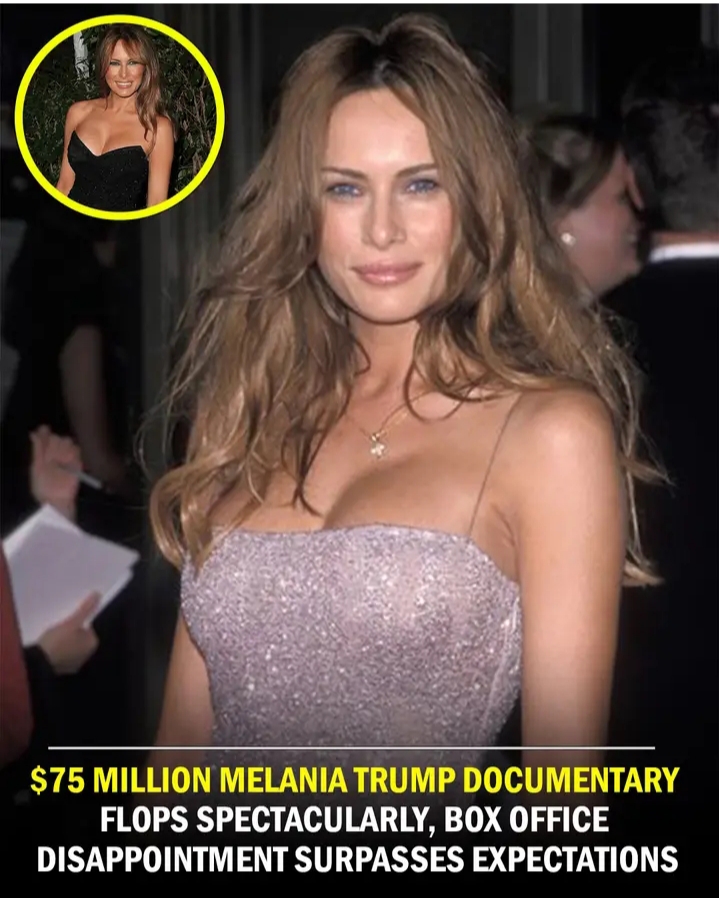
A multimillion-dollar documentary about Melania Trump has dramatically underperformed at the box office,
despite bold predictions, massive hype, and public endorsements from none other than former President Donald Trump himself. Backed by Amazon MGM Studios, the film reportedly cost around $40 million for production rights and an additional $35 million for marketing, making it one of the most expensive documentaries ever produced. Yet, upon release, the film managed to generate only $8 million worldwide, a fraction of expectations.
The documentary, which promised unprecedented access into the life of the former First Lady, had been positioned as a blockbuster event. Leading up to its premiere, Donald Trump enthusiastically promoted it on social media platform X, writing:
“MELANIA, the movie, is an absolute must. Get your tickets today — it’s selling out FAST!”
Despite the confident predictions, the reality could not have been more different. Empty theater seats, lukewarm audience reactions, and negative critical reviews painted a stark picture: the film failed to capture either hearts or box office dollars. Critics described it as a polished PR project rather than a revealing, critical documentary, raising questions about its artistic integrity and real purpose.
From a financial perspective, the numbers are shocking. Studios often hope for even a modest return on investment from documentaries, but spending $75 million and earning only $8 million represents a catastrophic loss. For comparison, many smaller-budget documentaries achieve profits multiple times their initial cost; this one fell far short of even breaking even.
Industry insiders have speculated about why the documentary failed so spectacularly. Some point to timing—the political climate is saturated with content about the Trumps, which may have reduced audience curiosity. Others suggest that the documentary’s tone, reportedly leaning heavily on PR-friendly narratives, failed to entice critics or neutral viewers looking for depth and insight. The combination of overhype and lack of substance appears to have been fatal.
Social media reacted with a mix of shock, humor, and memes. Tweets and posts comparing the $75 million budget to box office returns flooded platforms. Some users joked that the film “earned less than a day’s profit at a single fast-food chain,” while others sarcastically noted that Donald Trump’s prediction of sold-out theaters might have been the only thing that sold out—his optimism, that is.
Critics also weighed in on the content itself. Reviews pointed out that the film leaned heavily on previously known public appearances and scripted narratives, providing little fresh insight into Melania Trump’s life or persona. The lack of investigative depth and reliance on surface-level storytelling may have further contributed to its commercial failure.
The flop also raises questions about the economics of celebrity documentaries. Big budgets, aggressive marketing campaigns, and celebrity involvement do not guarantee audience turnout, even when the subjects are globally famous. Audiences now demand authenticity, depth, and compelling narratives—elements critics felt were lacking in this particular film.
Furthermore, the documentary’s failure highlights the risk inherent in tying media products too closely to political figures. While former presidents and their families generate interest, viewer fatigue and polarized opinions can create unpredictable box office outcomes. In this case, the blend of hype, heavy spending, and limited content appeal created a perfect storm for disappointment.
From a cultural perspective, the story of the documentary’s flop is almost as newsworthy as the film itself. It illustrates how, in the age of streaming, social media, and hyper-visible celebrity culture, even massive marketing budgets cannot guarantee success. Viral attention, public curiosity, and political relevance are no substitute for engaging storytelling and genuine insight.
Some industry analysts suggest the failure may have been strategic, rather than purely accidental. It’s possible the documentary was never intended to generate massive profits, instead serving as a prestige project or PR tool to maintain public visibility for the Trump brand. Regardless of intent, the market response was unequivocal: audiences did not show up.
Ultimately, the Melania Trump documentary serves as a cautionary tale for studios, marketers, and celebrities alike. Big promises, enormous budgets, and high-profile endorsements can create hype—but they cannot replace substance, narrative depth, and audience engagement. No matter how much money is spent, viewers remain the ultimate arbiters of a film’s success or failure.
In the end, $75 million down, $8 million earned, critics unimpressed, and audiences underwhelmed—this documentary proves that even fame, politics, and social media buzz cannot guarantee box office glory. Big budgets may attract attention, but without compelling storytelling, even the most high-profile projects risk spectacular failure.

JUST IN….The political world is in a complete state of shock after a nationally televised forum ended in a way no one could have predicted! It started when 19-year-old Barron Trump tried to land a sharp insult on a veteran senator to impress his father. But he wasn’t prepared for Barack Obama to step in. In just 8 seconds, Obama didn’t just defend the senator—he flipped the script and dropped a bombshell…..FULL STORY 👇 👇 👇
BREAKING….Trump Just revealed a disastrous error he made – and revealed just how unstable he is….FULL STORY ⬇️ ⬇️
JUST IN …..Donald Trump’s ‘worrying’ speech sparks concern as viewers all say same thing because…FULL STORY 👇 👇
JUST IN….The Pentagon’s press crackdown under Trump has just been struck down — but what really went on behind the scenes might shock you. Now, secrets had surface, and the public is left wondering: how close did democracy come to being silenced — and who really pulled the strings?…. FULL STORY 👇 👇

JUST IN….The 36 most stupid things Donald Trump has ever said….SEE MORE 👇 👇
BREAKING …What Was Really on Epstein’s Tapes? The HOME VIDEOS That Powerful Men Desperately Hoped Would Never See the Light of Day Shocking new footage from Jeffrey Epstein’s private archives has emerged, revealing deeply unsettling clips from his most controversial homes. These disturbing videos expose the dark realities behind Epstein’s lavish lifestyle,… MORE DETAILS BELOW 👇 👇 👇
GREENLAND “CLOSED” TO THE U.S.? CANADA–DENMARK SIGN HISTORIC ARCTIC PACT, TRUMP RESPONDS FURIOUSLY ⬇️ A new Arctic agreement is stirring intense debate across global political circles a bigger question is now emerging: Could this deal be reshaping the balance of power in the Arctic? ⬇️The full story and the deeper strategy behind this agreement are in the link 👇 🖇️ 👇 .
THE HAMMER DROPS: Gavin Newsom Reveals the “Bondi File” — The Room Falls Silent for 42 Seconds! The hearing was routine until Gavin Newsom stepped to the mic. No teleprompter. Just one unmarked folder that hadn’t been seen by a single staffer. He didn’t speak for nine full seconds. The silence was deafening. Then, his voice cut through like a razor: The room exploded. T.r.u.m.p’s expression turned grim. B0ndi’s face went ash-white. C-SPAN hit record viewership as the “Red Folder” became federal evidence. Game over. 👉FULL STORY 👇 👇 👇

JUST IN….Melania ŤRUMP ordered to testify under oath. A major legal shift has just occurred as judges rule that spousal privilege will not apply in several key cases. From the Mar-a-Lago documents to the newly unsealed Epstein files, the testimony everyone has been waiting for is finally happening. This isn’t just a court appearance—it’s a high-stakes moment that could change the direction of multiple investigations. ⬇️ READ THE FULL TRANSCRIPT & THE LIST OF COURT ORDERS BELOW 👇 👇 👇
BREAKING NEWS….The walls of corruption are crumbling! Senator Ron Wyden has just dropped a MASSIVE BOMBSHELL on Deputy Attorney General Todd Blanche—and the details are absolutely sickening. Why is Trump’s former personal lawyer blocking a “mysterious” 69-page Epstein report?…FULL STORY ⬇️⬇️

JUST IN….Maria Farmer called the Federal Bureau of Investigation, she claimed Jeffrey Epstein had photos of her underage sisters and described what she witnessed inside his mansion. She says the call was ignored. No case. No follow-up. No trace. For decades, no one could find proof she ever made that call… until 2025, when a hidden document finally surfaced — confirming a complaint filed on September 3, 1996. Nine years later, investigators would uncover dozens of victims. But by then… how much had already been allowed to happen? Now, 12 women are suing the FBI for $100 million, claiming those early warnings were ignored — and that failure changed everything. The file existed the whole time. So the question is no longer if it was real… 👉 It’s who chose to bury it — and why. 👇 Full timeline, missing file details, and what investigators are uncovering now….FULL STORY 👇 👇 👇
