
NFL
BREAKING NEWS: Trump Left Completely FURIOUS After Bragging That He Is One of the Greatest Presidents in History, Only for a Journalist to Fire Back, “NO ONE SAYS THAT!” But What Trump Told the Journalist Next Was Something No One Expected From an American President

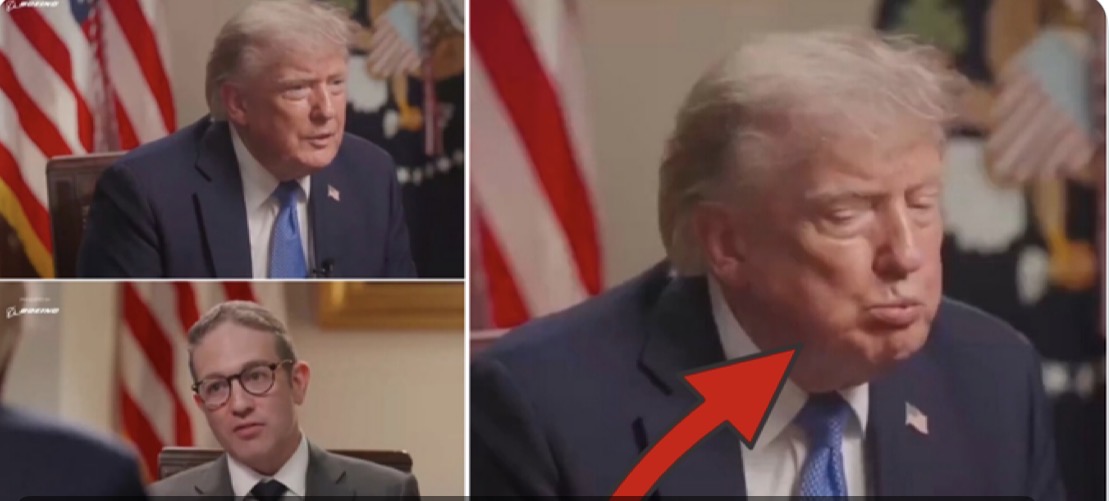
BREAKING NEWS: Trump Left FURIOUS After Journalist Challenges His Claim of Being One of America’s Greatest Presidents – His Unexpected Response Sparks Debate!
A tense political moment is reportedly attracting attention after an alleged exchange between Donald Trump and a journalist sparked a fresh debate about presidential leadership, public confidence, and the limits of political self-praise.
The dramatic headline centres on Trump’s reported confidence in his own presidential legacy, with the president allegedly describing himself as one of the greatest leaders in American history. However, the journalist supposedly challenged the statement with a blunt response: “NO ONE SAYS THAT!”
The alleged confrontation has become the subject of intense online discussion, with supporters and critics debating how a president should respond when challenged by members of the press.
Although the exact exchange and quoted remarks have not been independently verified, the scenario reflects the often confrontational relationship between Trump and journalists who question his statements.
A President Who Has Never Been Afraid to Praise Himself
Donald Trump has developed a political personality built around confidence, bold declarations, and an unapologetic approach to public communication.
Throughout his political career, he has frequently described his leadership, decisions, and achievements in exceptionally positive terms. Whether discussing the economy, immigration, foreign policy, or America’s position on the international stage, Trump has consistently presented himself as a leader who believes his administration deserves significant recognition.
For his supporters, this confidence is part of his appeal. They see a politician who refuses to apologise for his positions and is willing to challenge established political institutions.
His critics, however, frequently argue that his self-praise can overshadow important discussions about government performance, accountability, and the consequences of presidential decisions.
This difference in perception has made even seemingly ordinary press interactions opportunities for larger political arguments.
The Journalist’s Alleged Response Changes the Conversation
The most attention-grabbing part of the circulating story is the journalist’s alleged decision to challenge Trump’s description of himself.
Rather than simply moving to another question, the reporter supposedly responded with the words, “NO ONE SAYS THAT!”
If accurately reported, such a direct response would represent an unusually confrontational moment during a presidential exchange.
Journalists are expected to ask difficult questions, challenge questionable claims, and seek clarification when public officials make statements that require evidence.
However, questioning a president directly can create tense situations, particularly when the subject involves personal achievements, political reputation, or historical comparisons.
The alleged exchange has prompted discussions about whether reporters should be more confrontational when questioning powerful political figures.
Some believe journalists should challenge exaggerated political claims without hesitation. Others argue that difficult questions are more effective when delivered through evidence, context, and precise follow-up questions rather than confrontational remarks.
Trump’s Relationship With the Press
Trump’s relationship with American journalists has been controversial for years.
During his political campaigns and presidency, he has repeatedly criticised media organisations, challenged reporting he considers unfair, and engaged in heated exchanges with reporters.
His supporters often interpret these confrontations as evidence that he is willing to stand up to media organisations they distrust.
Critics, meanwhile, argue that attacks on journalists can weaken public confidence in independent reporting and make it more difficult for citizens to distinguish between political messaging and verified information.
The relationship is particularly important because presidential press conferences provide an opportunity for the public to hear questions that might otherwise go unanswered.
Reporters do not simply represent their own opinions. They also serve audiences seeking explanations about government decisions, public spending, international relations, and national security.
Why Presidential Self-Praise Attracts Attention
The question of who deserves to be remembered as one of America’s greatest presidents has been debated for generations.
Historical assessments typically consider several factors, including economic performance, leadership during national crises, foreign policy decisions, protection of democratic institutions, and long-term effects on American society.
Presidents such as Abraham Lincoln, George Washington, and Franklin D. Roosevelt frequently appear near the top of historical rankings because of their roles during defining moments in American history.
However, presidential rankings are not permanent. Historians and political analysts regularly reconsider presidential legacies as new evidence emerges and public attitudes change.
This is why claims about being among the greatest presidents naturally invite scrutiny.
A president can express confidence in his record, but historical recognition ultimately depends on how achievements and failures are evaluated over time.
Supporters and Critics See Things Differently
As discussions surrounding the alleged confrontation continue, reactions are likely to reflect America’s deeply divided political landscape.
Trump’s supporters may argue that a president should be allowed to defend his achievements confidently without being interrupted or mocked by reporters.
They may also point to policies and decisions they believe demonstrate effective leadership.
His critics, on the other hand, may argue that no president should expect praise without facing difficult questions.
For them, challenging a leader’s claims is not disrespectful. It is an important part of democratic accountability.
The disagreement illustrates how differently Americans interpret the same political personality.
For some, Trump’s confidence represents strength. For others, it represents an unwillingness to accept criticism.
The Importance of Journalistic Accountability
Regardless of political affiliation, the exchange raises an important question about the responsibilities of journalists covering the presidency.
A president holds one of the most powerful positions in the world. Decisions made in the White House can affect millions of Americans and influence countries far beyond the United States.
That responsibility makes presidential accountability essential.
Journalists must be prepared to ask uncomfortable questions, request supporting evidence, and challenge statements that appear inconsistent with available information.
At the same time, responsible reporting requires accuracy. Dramatic quotations and viral political stories should be checked against original footage, transcripts, and reliable reporting before being treated as established facts.
A headline may attract millions of views, but the public deserves to know exactly what happened.
Trump’s Presidential Legacy Remains a Subject of Debate
Whatever happens in the coming months, Trump’s place in American political history will continue to generate passionate disagreements.
His supporters will evaluate his leadership through the policies and achievements they consider important. His opponents will focus on decisions and controversies they believe damaged the country.
Historians will eventually have the benefit of greater distance and a fuller understanding of the long-term consequences of his presidency.
For now, his public interactions with journalists remain an important part of the political conversation.
The alleged exchange serves as another reminder of how quickly a disagreement over presidential achievements can become a national talking point.
What do you think? Should journalists directly challenge a president when he makes bold claims about his own legacy, or should they allow him to explain his achievements before responding? Share your opinion in the comments!

URGENT! Kate Middleton’s condition worsens — she’s h0spitalized for the second time, doctors deliver TRAGIC NEWS…” (For Full Information, Check Link In Comment👇🏻👇🏻)

10 minutes ago! Prince Harry, filled with deep regret, rushed back to the Palace upon hearing the SAD NEWS: ‘I’m sorry… my father has…’” (For Full Information, Check Link In Comment👇🏻👇🏻)

5 MIN AGO: Royal family order a official DNA on Megan child. Meghan Markle panic as King Charles Reportedly Demand Official DNA Text for Archie and Lilibet After Her Ex Raises a Shocking Alarm

A Price Too High? – Rumors say Harry and Meghan want to mend fences, yet insiders reveal they’re facing intense pressure to apologize to William and Kate first. But even if they swallow their pride, William’s private reaction proves something nobody expected… Details here 👇

BREAKING NEWS: President Trump Faints and Is Rushed Out of the White House Following Crushing 2026 US Midterm Election Defeat, With His Condition Sadly Confirmed to Be…

1 HOUR AGO! Harry rushed back to the Palace after hearing the sound of an emergency summons bell. The Royal Family announced IMPORTANT NEWS that changes the monarchy: ‘We regret to announce…

Kim Kardashian is giving EVERYTHING in her new SKIMS collection! 😍🔥 The body, the confidence, the effortless sex appeal! Nobody knows how to sell a look quite like Kim!

Prince Harry, 42, spotted enjoying an intimate vacation in the UK with a mysterious 31-year-old woman without his wife Meghan Markle, 45, but one unexpected detail raises big questions.

Breaking: Royal Family In Deep Mourning As Palace Confirms Heartbreaking News — Shocking Announcement Leaves King Charles, Prince William, Prince Harry And The Entire Nation Devastated! What Happened Behind Palace Walls Has Left Royal Fans Speechless..

Attention and spark high engagement: “Surprise Sighting: Taylor Swift Steps Out in NYC, Sparking Massive Fan Speculation Over New Photos of her carrying what seem to be a baby bump……

BREAKING: Trump has completely lost his mind and collapsed during an explosive call with Netanyahu at the Oval Office in the White House, after the shouting became too loud, Staffs went in to check on him, only for cameras accidentally left running to capture the shocking thing he said before White House staff rushed to attend to him, leaving Americans furious and demanding his immediate resignation
