
NEWS
BREAKING: White House Doctor BREAKS SILENCE on a TERRIBLE Diagnosis About Trump’s Health After He Recently Fainted After Crushing 2026 US Midterm Election Defeat, Revealing a Shocking Link to Photos of Band-Aids on Trump’s Hand – And Also Reveals the Real Reason He Has Been Uncontrollably Falling Asleep During Meetings… It Is Really a Terrible Diagnosis, and the Doctor Just Exposed It…

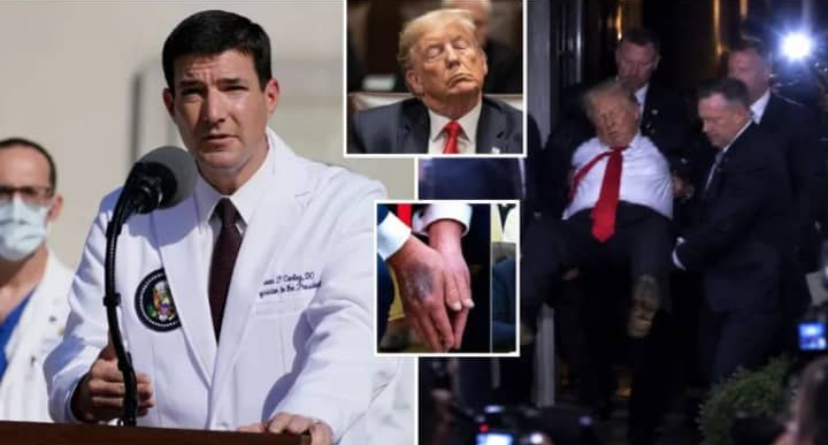
BREAKING: White House Doctor BREAKS SILENCE on a TERRIBLE Diagnosis About Trump’s Health After He Recently Fainted After Crushing 2026 US Midterm Election Defeat, Revealing a Shocking Link to Photos of Band-Aids on Trump’s Hand – And Also Reveals the Real Reason He Has Been Uncontrollably Falling Asleep During Meetings… It Is Really a Terrible Diagnosis, and the Doctor Just Exposed It…
DONALD TRUMP’S ADMINISTRATION UNDER THE SPOTLIGHT: PRESIDENT’S HEALTH CHALLENGES, MEDICAL TREATMENT AND GROWING QUESTIONS ABOUT HIS FITNESS FOR OFFICE
Washington, D.C. — November 5, 2026
The administration of United States President Donald Trump continues to attract international attention as political battles, controversial policy decisions and questions about presidential health remain prominent in American public life.
At 80 years old, Trump is serving as president during a period of significant political and institutional change. While his administration continues to pursue its domestic and international priorities, attention has increasingly turned towards his physical condition, medical examinations and the health challenges associated with ageing.
The White House has repeatedly maintained that the president remains capable of performing his responsibilities. However, reports of swollen lower legs, bruising on his hands and his ongoing medical monitoring have generated public curiosity and renewed discussions about transparency surrounding the health of America’s oldest inaugurated president.
Although there is no publicly confirmed medical evidence that Trump is unable to perform his presidential duties, his health remains a subject of considerable public interest.
Trump’s administration faces mounting political and policy challenges
Since returning to the White House for his second presidential term, Trump has pursued an ambitious political agenda focused on immigration, government restructuring, economic policy, national security and changes to federal institutions.
His administration has also placed considerable emphasis on reducing government spending, restructuring federal agencies and changing the direction of several established government programmes.
Supporters argue that these measures represent an effort to make government more efficient and fulfil campaign promises.
Critics, however, have raised concerns about the consequences of large-scale government restructuring, particularly for healthcare, scientific research, public health services and vulnerable communities.
Healthcare policy has become one of the particularly controversial areas of the administration.
Changes involving Medicaid, federal health agencies and childhood vaccination recommendations have attracted criticism from medical organisations, public health advocates and political opponents.
The administration’s approach has generated an ongoing national debate about the balance between government reform, individual choice, scientific evidence and access to healthcare.
Growing attention surrounding Trump’s health
Beyond politics, Trump’s personal health has become an increasingly important subject.
The president has undergone several medical examinations during his second term, with particular attention paid to his cardiovascular health, circulation, weight and neurological condition.
One of the most significant developments came in July 2025, when the White House announced that Trump had been diagnosed with chronic venous insufficiency.
The condition was identified after doctors investigated swelling in his lower legs.
Chronic venous insufficiency is a condition in which the veins struggle to move blood efficiently from the legs back towards the heart. This can cause blood to accumulate in the lower extremities, resulting in swelling, discomfort and other symptoms.
The condition is relatively common among older adults.
Although it is not automatically life-threatening, it requires appropriate medical assessment and management to prevent complications.
The White House described Trump’s condition as benign and said there was no evidence of deep vein thrombosis or arterial disease in the examinations it disclosed.
The diagnosis nevertheless attracted considerable attention because of Trump’s age and the demanding nature of the presidency.
What doctors have said about his treatment
Managing chronic venous insufficiency generally involves measures designed to improve circulation and reduce swelling.
These may include compression stockings, regular physical activity, elevating the legs, weight management and other treatments depending on the severity of the condition.
Trump previously disclosed that he had briefly tried wearing compression socks but stopped because he disliked them.
There has been no publicly confirmed announcement that he has undergone surgery or received a specific invasive procedure for the condition.
His medical team has continued monitoring the swelling.
In the White House medical memorandum released on May 29, 2026, doctors reported that the president still had slight lower-leg swelling, although it had improved compared with the previous year.
The report described his overall circulation and cardiovascular function as normal.
This suggests that the administration’s publicly disclosed approach has involved monitoring and preventive health measures rather than announcing an emergency medical intervention.
Concerns about bruising on Trump’s hands
Another issue that has attracted public attention is the visible bruising on Trump’s hands.
Photographs from public appearances have occasionally shown discoloured areas on the backs of his hands, prompting questions about possible causes.
The White House physician has attributed the bruising to minor soft-tissue irritation associated with frequent handshaking and aspirin use.
According to the president’s medical disclosures, he takes aspirin for cardiovascular prevention.
Aspirin can reduce the blood’s ability to form clots, but it can also make bruising and bleeding more likely.
The president has also discussed his preference for taking a higher aspirin dose than his doctors recommend.
In October 2026, reporting by The Wall Street Journal highlighted the challenge facing the White House medical team in advising a president who has expressed reluctance to change a long-established medication routine.
This has renewed discussions about the importance of medical supervision, particularly for older adults taking medication that affects blood clotting.
It is important to understand that bruising alone does not establish that someone has a serious underlying illness.
The latest medical examination: What was discovered?
One of the most important public updates came after Trump’s annual medical examination at Walter Reed National Military Medical Center on May 26, 2026.
The White House released the physician’s memorandum three days later.
According to the report, the examination involved consultations with 22 specialist providers and a review of diagnostic studies and laboratory results.
The disclosed findings included:
- Age: 79 at the time of examination.
- Weight: 238 pounds.
- Resting heart rate: 73 beats per minute.
- Cardiovascular health: Normal cardiac examination and no abnormalities reported on the echocardiogram.
- Neurological health: Normal examination, including gait, balance, reflexes and motor strength.
- Cognitive assessment: A Montreal Cognitive Assessment score of 30 out of 30.
- Lower-leg swelling: Slight swelling, improved compared with the previous year.
- Hand bruising: Described as benign and associated with aspirin use and frequent handshaking.
The physician also reported normal depression and anxiety screening results.
The White House concluded that Trump remained in excellent overall health and was fit to carry out his presidential responsibilities.
However, some outside medical experts have argued that the public medical summaries leave important questions unanswered, particularly because they do not provide every detailed measurement that might help independent specialists assess his long-term health.
Medications and preventive health measures
The May 2026 medical memorandum listed three medications:
1. Rosuvastatin
This medication is used to lower cholesterol and reduce cardiovascular risk.
2. Ezetimibe
This medication also helps reduce cholesterol, working through a different mechanism from rosuvastatin.
3. Aspirin
Aspirin is used for cardiovascular prevention in selected patients because it reduces platelet activity and can lower the risk of certain blood clots.
The physician’s report also discussed preventive recommendations involving physical activity, dietary improvements, low-dose aspirin and continued weight management.
It is worth noting that aspirin is not a treatment for chronic venous insufficiency itself. Its reported use is for cardiovascular prevention.
Any changes to these medications would need to be determined by Trump’s treating physicians.
Questions about Trump’s age and presidential responsibilities
Trump’s age has become an unavoidable part of discussions about his health.
At 80, he holds a position that requires enormous physical and mental demands.
The American presidency involves lengthy meetings, international travel, public appearances, emergency decision-making and constant communication with government officials.
These responsibilities can be challenging even for younger leaders.
Consequently, questions about presidential health are not simply personal matters. They also concern continuity of government and the public’s confidence in national leadership.
Supporters point to the White House physician’s medical assessments and Trump’s continued public schedule as evidence that he remains capable.
Critics argue that more detailed and consistent medical disclosures would help the public better understand his condition.
The debate is particularly sensitive because presidential health information involves two competing interests: an individual’s right to medical privacy and the public’s legitimate interest in understanding the fitness of its elected leader.
Is Trump facing a serious medical emergency?
Based on the publicly available medical information reviewed for this article, there is no confirmed evidence that Trump is currently experiencing a medical emergency or has been declared unfit for office.
His disclosed medical concerns include chronic venous insufficiency, occasional lower-leg swelling and hand bruising associated with aspirin use.
His latest published annual examination described normal cardiac and neurological findings.
Nevertheless, an official medical assessment is a snapshot of someone’s health at a particular time. It cannot guarantee that future medical problems will not develop.
That is why continued monitoring and appropriate medical care remain important.
There have also been questions from outside physicians about the level of detail contained in the administration’s health disclosures.
Those questions should not automatically be interpreted as proof of an undisclosed disease.
What lies ahead for the Trump administration?
As the administration moves further into its second term, its ability to maintain political momentum will depend on several factors.
These include economic performance, public confidence, international relations, healthcare policy and the administration’s ability to manage political opposition.
Trump’s health will remain part of the national conversation, particularly as he continues to age.
The White House medical team will have an important responsibility to monitor his condition, communicate relevant findings and ensure that any emerging medical concerns receive appropriate attention.
At the same time, the president’s administration will face continuing scrutiny over its healthcare decisions and the wider consequences of its policies.
Conclusion: A presidency under political and medical scrutiny
Donald Trump’s second administration is operating under intense public scrutiny.
While the president continues to lead the country, his age and publicly disclosed medical conditions have become important subjects of national discussion.
The diagnosis of chronic venous insufficiency, reports of lower-leg swelling and visible hand bruising have raised questions, but the latest publicly released medical examination described his overall health as excellent.
For now, the available evidence does not establish that Trump is medically unable to perform his duties.
What remains important is continued medical supervision, accurate public information and responsible reporting that separates confirmed medical findings from rumours and political speculation.
Ultimately, Americans will continue watching both the decisions coming out of the White House and the health of the man responsible for making them.

Tragic News: Princess Anne announces a royal family member has PASSED AWAY this morning, prompting Harry and Meghan to rush home: “Sadly, that person was…”.

RAPPER SIXNEEN REPORTEDLY MARRIES WOMAN WITH DOWN SYNDROME IN PRIVATE CEREMONY -HIS REPORTED LOVE CONFESSION MELTS HEARTS

Thomas Markle, 82-year-old Meghan Markle’s Estranged Father, Arrested by Federal Agents in Florida Over Shocking Child Sexual Abuse Material Allegations, as Disturbing New Details Emerge…

Susie Wiles makes it official: TODAY is her final day as White House Chief of Staff. And now, it’s MILLER TIME.

Kourtney Kardashian Addresses Rumor She and Husband Travis Barker Are Living Apart

Meghan Markle Sparks Fresh Speculation After Reportedly Being Spotted With Mystery Man-Has She Moved On From Prince Harry?

BREAKING: White House Doctor BREAKS SILENCE on a TERRIBLE Diagnosis About Trump’s Health After He Recently Fainted After Crushing 2026 US Midterm Election Defeat, Revealing a Shocking Link to Photos of Band-Aids on Trump’s Hand – And Also Reveals the Real Reason He Has Been Uncontrollably Falling Asleep During Meetings… It Is Really a Terrible Diagnosis, and the Doctor Just Exposed It…

1 HOUR AGO! William wept as he revealed Diana’s secret D.N.A report. Harry beamed with joy telling Charles, but shock froze the Palace. Charles suffered a stroke, whispering in despair: ‘Oh God… the true father is…’” (For Full Information, Check Link In Comment👇🏻👇🏻)

Major Administration Shakeup: Who Is Stephen Miller, Donald Trump’s Newly Named White House Chief of Staff?

King Charles III Caught in a Romantic Beach Moment with a Mysterious 45-Year-Old Woman as Photos of Their Intimate Encounter Send Royal Fans Into a Frenzy

Offset posted texts he got from Cardi B saying he should see the kids and she misses him.Offset’s response was cold😭😳
